What Is the Future of Smart Security Technology in 2026?

Time:2026-10-14 Author:Amelia
0%

What is the future of smart security technology? This question now reaches beyond sharper cameras and louder alarms. In 2026, protection will increasingly combine edge computing, privacy-aware analytics, verified identity, and connected sensors. A smart lock may recognize a resident, detect unusual movement, and alert a trusted phone within seconds. Local data processing can reduce delays and limit unnecessary cloud exposure. Yet convenience creates difficult questions about consent, access, maintenance, and human oversight.

Bruce Schneier, a leading security technologist and author, offers a useful foundation: “Security is a process, not a product.” His words remain relevant as homes, offices, schools, and transport systems become more connected. Future systems should be judged by their full lifecycle, not by glossy launch demonstrations. Manufacturers need transparent updates, clear failure warnings, strong encryption, and accessible controls. Independent testing can help buyers separate meaningful protection from impressive marketing.

The most promising designs will combine automation with accountable people. An AI system might flag a package near a side entrance, while a trained operator reviews the event. That pause matters. False alerts can exhaust users, and biased models can make poor decisions. Smart security is not automatically fair or reliable. This article examines the technologies, risks, and practical standards shaping 2026. It also asks where confidence should stop. The future may be safer, but innovation must earn trust.
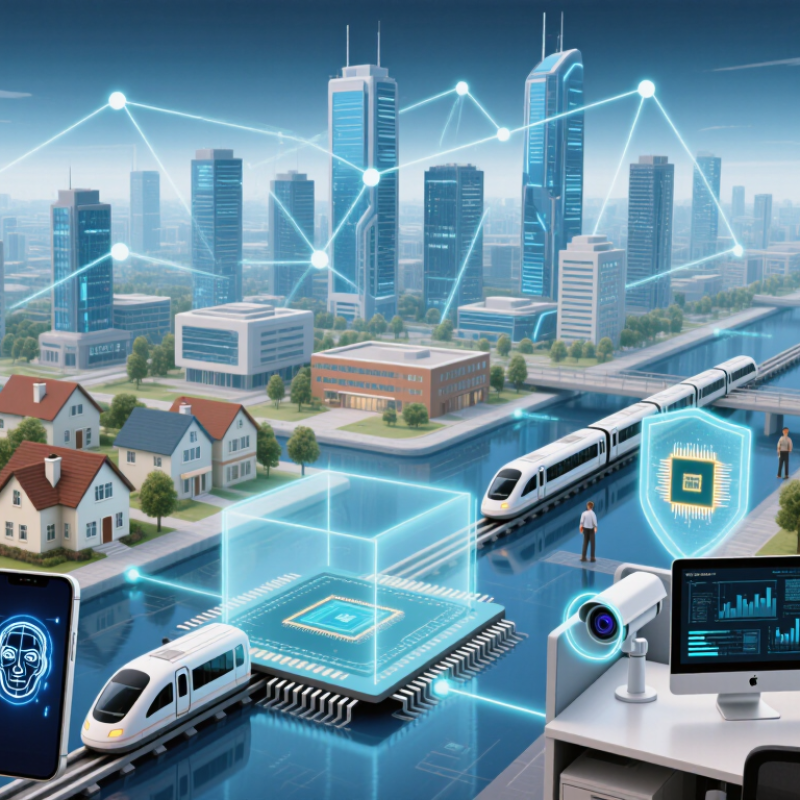
What Is the Future of Smart Security Technology in 2026?

Foundations and Current State of Smart Security Technology

What Is the Future of Smart Security Technology in 2026?

Foundations and Current State of Smart Security Technology

Smart security technology now rests on connected sensors, local processing, encrypted communication, and carefully managed user access. Cameras, door contacts, motion detectors, and environmental sensors can share signals within one system. A hallway camera may detect movement, while a door sensor confirms whether entry actually occurred. This combination creates stronger context than one device working alone.

Current systems increasingly use artificial intelligence to identify unusual activity, reduce false alerts, and support faster decisions. However, accuracy depends on lighting, placement, network quality, and training data. Experience from real installations shows that expensive hardware cannot repair poor positioning. A camera facing direct sunlight may miss a clear face. Small details matter. Human review remains important, especially when an alert could affect personal safety. Overconfidence is still a weakness.

Tips: Place sensors at natural entry points, test alerts during daytime and darkness, and update access permissions regularly. Keep sensitive processing local when practical. Review stored footage and delete unnecessary data according to a clear policy. Ask whether each alert is useful, not merely impressive.

By 2026, the strongest foundations will likely combine automation with transparent controls. Residents and security staff should understand why an alert appeared and what information was used. Systems should also continue operating during temporary connectivity problems. No technology is perfect. A dependable design accepts failure, records it clearly, and makes correction possible.

Key Innovations Shaping Smart Security in 2026

What Is the Future of Smart Security Technology in 2026?

Smart security in 2026 will depend on faster, quieter intelligence. IoT Analytics estimates that connected IoT devices could reach 29.4 billion by 2030. This growth will push security systems beyond simple motion detection. Edge-based AI can examine video, audio, and sensor data inside a home or building. It can identify a forced door, unusual movement, or a fall without sending every recording to the cloud. Faster alerts matter. So does privacy.

Multi-sensor systems will become more practical. A camera may detect movement, while radar confirms distance and a door sensor checks access status. This layered approach can reduce false alarms. However, the machine still misses context. A delivery worker, a pet, and an intruder may look similar at night. Human review remains important for sensitive decisions.

Cybersecurity will shape trust as much as detection. Verizon’s 2024 Data Breach Investigations Report found that the human element appeared in 68% of breaches. Smart security devices therefore need stronger default passwords, automatic updates, encrypted communications, and clear access logs. NIST’s AI Risk Management Framework also encourages testing, monitoring, and documented accountability. These controls sound basic, but real installations often neglect them. Interoperability remains another weakness, because devices may use different standards and produce conflicting alerts. Practical progress will require secure design, transparent testing, and operators willing to question imperfect automation.

What Is the Future of Smart Security Technology in 2026? - Key Innovations Shaping Smart Security in 2026
Innovation Area Verified Technical Reference Expected 2026 Security Value Useful Measurement Dimension Implementation Priority Primary Risk and Control
Edge AI Video Analytics Ultra-high-definition video commonly uses a 3840 × 2160 image format, equal to approximately 8.3 million pixels per frame. 8.3 MP per frame Local analysis can reduce the amount of raw video sent to central systems and support faster detection of intrusion, unsafe activity, and abnormal movement. Detection precision, false-alarm rate, alert latency, bandwidth reduction, and percentage of processing completed locally. High for sites that require rapid alerts, limited connectivity, or stronger control over video data. Model bias, poor lighting, and false positives. Use representative training data, human review, audit logs, and regular model testing.
Post-Quantum Cryptography Three principal post-quantum cryptographic standards were finalized in 2024: ML-KEM for key establishment, ML-DSA for digital signatures, and SLH-DSA for hash-based digital signatures. 3 finalized standards Security systems can begin replacing quantum-vulnerable public-key algorithms before large-scale quantum computers become practical. Percentage of cryptographic assets inventoried, systems supporting algorithm agility, migration coverage, and certificate replacement time. High for long-lived data, access-control systems, connected devices, and security platforms with long replacement cycles. Compatibility problems and weak migration planning. Maintain a cryptographic inventory and use hybrid transition designs where appropriate.
Zero-Trust Access Control Zero-trust architecture removes implicit trust based on network location and requires continuous verification of users, devices, applications, and sessions. Compromised credentials or unauthorized devices receive less automatic access, reducing the potential impact of lateral movement inside a protected environment. Percentage of applications using risk-based access, privileged-session coverage, continuous verification rate, and time to revoke access. High for cloud-connected buildings, distributed workforces, and security systems that combine physical and digital identity data. Excessive access friction or incomplete asset inventories. Apply least privilege, risk-based policies, and staged deployment.
Phishing-Resistant Authentication Modern authentication guidance distinguishes phishing-resistant methods from passwords and one-time codes that can be captured through social engineering. Hardware-backed or cryptographic authentication can reduce account takeover caused by stolen passwords, replayed codes, and fraudulent login pages. Passwordless adoption rate, phishing-resistant coverage, blocked high-risk logins, account-recovery incidents, and authentication success rate. High for administrators, remote operators, security control rooms, and users with access to sensitive facilities or data. Lost authenticators and recovery abuse. Provide secure recovery procedures, device binding, backup methods, and administrator separation.
5G-Enabled Connected Security IMT-2020 performance targets include up to 20 Gbit/s peak downlink, approximately 1 millisecond user-plane latency for specific ultra-reliable low-latency scenarios, and up to 1 million connected devices per square kilometre. 20 Gbit/s peak downlink High-capacity wireless networks can support mobile cameras, emergency communications, autonomous patrol devices, and distributed sensor networks. End-to-end latency, service availability, device density, uplink capacity, handover interruption time, and traffic isolation. Medium to high where wired connectivity is difficult or rapid deployment is important. Radio interference, outages, and exposed network interfaces. Use network segmentation, encrypted communications, backup connectivity, and local fail-safe operation.
Privacy-Preserving Biometrics Presentation-attack detection is formally addressed by ISO/IEC 30107-3, while privacy principles require data minimization, purpose limitation, and controlled retention. Biometric systems can support faster identity verification while reducing unnecessary storage and limiting the exposure of raw biometric images. False acceptance rate, false rejection rate, presentation-attack detection performance, consent coverage, and biometric deletion compliance. Medium to high for restricted facilities, provided that less intrusive authentication options are assessed first. Irreversible biometric exposure, demographic performance differences, and unlawful processing. Prefer protected templates, clear consent, alternatives, and strict retention limits.
Privacy-Enhanced Video Storage Data-protection principles generally require organizations to collect only necessary data and retain it no longer than needed for the stated purpose. Automated retention rules, selective redaction, and event-based storage can reduce exposure while preserving evidence needed for investigations. Average retention period, percentage of footage automatically deleted, redaction accuracy, access-log completeness, and evidence retrieval time. High for surveillance environments that process large volumes of identifiable video. Unauthorized access, excessive retention, and incomplete deletion. Apply encryption, role-based access, immutable audit logs, and documented retention schedules.
Interoperable Security Platforms Open security protocols and standardized interfaces can allow cameras, sensors, access systems, alarms, and analytics tools to exchange structured event information without depending on one proprietary platform. Interoperability can improve incident correlation, reduce integration delays, and make it easier to replace individual components without rebuilding the entire security architecture. Number of supported interfaces, integration time, event-delivery success rate, vendor-neutral data coverage, and percentage of systems using documented APIs. High for multi-site operations and organizations managing equipment from different technology generations. Inconsistent data models and insecure interfaces. Require authentication, encryption, schema validation, API rate limits, and independent security testing.
Reference basis: NIST zero-trust and digital identity guidance, finalized post-quantum cryptographic standards, ITU IMT-2020 performance requirements, ISO/IEC presentation-attack detection guidance, and established data-minimization principles.

How Artificial Intelligence Will Improve Security Systems

By 2026, artificial intelligence will make security systems more attentive, not simply more automated. Advanced software can examine camera feeds, access records, and sensor signals within seconds. It may recognize unusual movement, forced entry, smoke, or a person entering a restricted area. Small changes matter. Instead of sending every alert, the system can rank threats by timing, location, and behavior. This helps security staff focus on events requiring human judgment.

Practical deployments In practical deployments, AI can reduce repetitive monitoring across offices, warehouses, and residential buildings. A control room operator might receive one clear warning instead of dozens of weak alerts. The system could show the relevant video moment, nearby sensor readings, and a suggested response. That saves valuable minutes. However, cleaner alerts do not guarantee better decisions. Poor lighting, blocked cameras, unusual weather, or incomplete training data can still create mistakes.

Human oversight will remain essential. Security teams should test AI regularly, record false alarms, and review whether alerts affect people fairly. Strong access controls and encrypted data can reduce privacy risks. Clear retention rules matter too. People deserve to know how security information is collected and used. The technology will not be flawless. That expectation is too optimistic. A reliable system should explain its warnings, allow manual review, and improve after carefully documented incidents. AI can strengthen protection, but responsible design will determine whether people trust it.

Privacy, Cybersecurity, and Ethical Challenges

What Is the Future of Smart Security Technology in 2026?

Privacy, Cybersecurity, and Ethical Challenges

By 2026, smart security will watch more than doors and windows. It may interpret voices, faces, movement, and unusual routines. A hallway camera could flag a late-night visitor within seconds. Yet speed should not outrank privacy. Systems should process sensitive footage locally whenever possible. Clear settings must show what is collected, why, and for how long. People deserve real consent, not a hidden checkbox.

Cybersecurity will become a daily maintenance task, not a one-time installation. Strong encryption, signed updates, and separate user accounts can reduce exposure. Security teams should test devices against stolen passwords, altered footage, and poorly protected home networks. Access logs need plain language. Who opened the video? At what time? For what reason? Small details matter. A single forgotten administrator account can weaken an otherwise advanced system.

Ethics will be harder than engineering. Facial analysis may misidentify a child, a visitor, or someone from a minority group. Automated alerts can turn ordinary behavior into suspicion. Human review remains essential when consequences affect employment, housing, or public access. Developers should publish error rates, retention rules, and appeal processes. I do not expect perfect protection. That expectation itself is dangerous. The better goal is accountable technology that explains decisions, admits uncertainty, and lets people step outside constant observation.

Future Applications and Development Trends in Smart Security

By 2026, smart security will move beyond recording incidents. It will interpret events across cameras, sensors, access points, and environmental systems. MarketsandMarkets projects the global video surveillance market will grow from 53.7 billion dollars in 2023 to 83.3 billion dollars by 2028. This expansion supports wider use of edge AI, which processes alerts near the camera instead of sending every image to the cloud.

The most practical applications will appear in ordinary spaces. A building entrance may combine facial-free identification, motion sensing, and package detection. A warehouse may use thermal sensors to identify overheating equipment before smoke appears. The Internet of Things Analytics State of IoT report found that 64% of surveyed organizations planned to increase IoT investment in 2024. Security systems will benefit from this connected infrastructure, but interoperability remains uneven.

Privacy-preserving design will become a development requirement, not a marketing option. Encryption, short retention periods, local processing, and clear access records can reduce unnecessary exposure. However, AI alerts still produce false positives, especially in rain, darkness, or crowded corridors. Training data may also reflect social bias. Human review remains necessary. That is the uncomfortable part. A 2024 NIST face recognition evaluation showed that error rates can vary significantly across demographic groups. By 2026, reliable systems should explain alerts, measure accuracy openly, and allow operators to challenge automated decisions. Clever technology is not always dependable technology.

FAQS

What technologies form the foundation of smart security systems?

Connected cameras, door contacts, motion detectors, and environmental sensors share information. Local processing can analyze signals without sending everything away. Encrypted communication protects data during transmission. Managed user access limits who can view sensitive information.

How does artificial intelligence improve security monitoring?

Artificial intelligence can compare camera footage, access records, and sensor signals quickly. It may identify forced entry, smoke, unusual movement, or restricted-area access. The system can rank alerts by timing, location, and behavior. This helps staff focus on serious events.

Can artificial intelligence eliminate false security alerts?

No system can promise that. Poor lighting, blocked cameras, weather, and weak training data still cause mistakes. A camera facing sunlight may miss a clear face. Human review remains necessary.

Where should sensors and cameras be placed?

Place sensors near natural entry points, such as doors, gates, and narrow hallways. Test cameras during daylight and darkness. Check whether furniture, glare, or shadows block important details. Expensive equipment cannot fix poor positioning.

How should people protect privacy in smart security systems?

Systems should explain what information they collect and why. Sensitive footage should be processed locally when practical. Clear retention rules should remove unnecessary recordings. Consent must be visible, not hidden inside a confusing checkbox.

What cybersecurity practices should security teams follow?

Use strong encryption, signed updates, and separate accounts for different users. Review access logs regularly. Record who opened footage, when, and for what reason. A forgotten administrator account can weaken the whole system.

Why is human oversight still important?

Automated warnings can misunderstand ordinary behavior. Facial analysis may misidentify visitors, children, or minority groups. Human reviewers should check serious alerts before decisions affect housing, employment, or public access. Automation is helpful, but not wise by itself.

How should a dependable security system handle failures?

It should continue working during temporary network problems. The system should record failures clearly and support manual correction. Staff should review false alarms and improve settings after incidents. Perfect protection is unrealistic. That matters.

Conclusion

Smart security technology is evolving from isolated alarms and cameras into connected, intelligent systems that can understand environments, identify unusual behavior, and respond more quickly to potential risks. In 2026, key innovations such as edge computing, advanced sensors, biometric verification, automation, and real-time data analysis will make security solutions more accurate, flexible, and efficient. Artificial intelligence will help systems recognize patterns, reduce false alerts, predict maintenance needs, and support faster decision-making while keeping human oversight at the center.

The question “what is the future of smart security technology” also requires careful consideration of privacy, cybersecurity, transparency, and ethical use. Future systems must protect personal data, resist digital attacks, provide clear user controls, and avoid unfair or excessive monitoring. Applications may expand across homes, workplaces, transportation, public facilities, and critical infrastructure, with greater integration between physical and digital protection. Overall, the future will depend on balancing convenience and safety with accountability, privacy, and responsible technological development.

Amelia

Amelia

Amelia is a seasoned marketing professional with a wealth of expertise in our company’s core offerings. With an unwavering passion for driving growth and innovation, she plays a pivotal role in shaping our marketing strategies and enhancing brand visibility. A key aspect of her responsibilities......